
Where My Children Walk
Old Dominion University

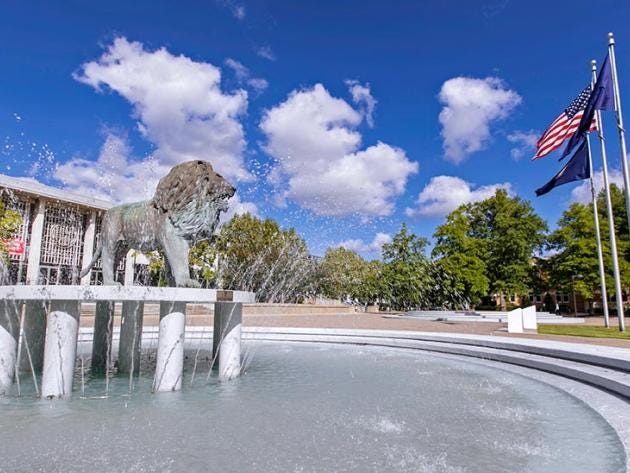
Photo credit: Old Dominion University.
When We Say “It Won’t Happen Here”
There is a familiar moment that follows every act of violence in a place meant for learning, worship, or gathering.
The first images appear on the news. A school hallway. A church entrance. A college campus suddenly crowded with flashing lights and reporters speaking in hushed urgency.
We respond almost instinctively.
This is terrible.
How heartbreaking.
How could this happen?
And somewhere in the quiet that follows, another thought appears.
At least it wasn’t here.
It is the fragile instinct of self-preservation. It creates a small psychological distance between our lives and the unimaginable.
We tell ourselves these events belong somewhere else. Another city. Another school. Another community whose name we learn only after tragedy forces us to pronounce it.
Elementary schools.
Middle schools.
High schools.
Colleges and universities.
Churches.
Concerts.
Grocery stores.
Each time the cycle repeats, we respond with the same stunned sorrow and disbelief that such violence could enter places built for learning, faith, or community.
Yet something else has quietly changed in the world we inhabit.
It is no longer a question of whether violence can reach these spaces.
It is a question of when.
Not when a community deserves it.
Not when it has done something wrong.
Simply when chance and circumstance allow tragedy to arrive.
That realization settles in gradually, not as panic or outrage, but as fatigue. A kind of moral weariness that comes from watching the same tragedy unfold again and again.
I am weary of watching innocent lives become headlines. I am weary of seeing communities gather in grief beneath temporary memorials of candles and flowers.
I am tired of hearing the language we have learned to use afterward. Words like unthinkable, tragic, and devastating.
The words are always true. But they are no longer new.
Perhaps that is what troubles me most. Not only the violence itself, but the way it has become something we expect to encounter again.
Another place.
Another school.
Another campus.
Yesterday, for me, that place was Old Dominion University.
A campus where I once studied. A place where my children have walked between classes and crossed the familiar brick paths toward their futures. Soon another will return there to begin his DPT program.
For a moment, the distance disappeared.
The quiet belief that these events happen somewhere else dissolved. What remained was the recognition that the world we inhabit now asks communities to hold two realities at once.
We must continue building places of learning. Places of faith. Places where young people gather to study, question, and imagine the lives they hope to build.
At the same time, we carry the knowledge that violence can reach even these spaces.
I do not pretend to have perfect words for this moment.
I only know that I am tired.
Tired of watching innocence shattered by acts that hold no meaning beyond destruction. Tired of wondering how many more communities will experience the same sudden rupture of ordinary life.
Yet even in this weariness, classrooms will open again. Students will return to their desks and professors will begin new lectures. Campuses will continue to fill with the quiet movement of people pursuing knowledge and purpose.
These places must endure.
Not because the world has become safe.
But because the work done inside them remains essential.
Learning, community, and compassion cannot retreat from violence.
They must remain present, even in a weary world.
Perhaps the only honest way to respond to moments like this is to bear witness, to remember why these places matter, and to continue walking their paths forward.
Where My Children Walk
Yesterday
sirens moved through the campus
where my children once carried backpacks
and coffee cups
between lectures and long afternoons of study.
Old Dominion.
A place I know
not from headlines
but from years of walking its paths.
I studied there once.
Later, I watched two of my sons
cross those same bricks
toward their own futures.
Soon one will begin his graduate work.
He will step into a program
that will teach him
the work of healing.
And yesterday
for a moment
that place felt suddenly fragile.
The news carried the words
no university community
should ever have to hear.
But when I think of ODU
I do not think first of fear.
I think of classrooms
lit late into the evening.
Of students bent over notebooks
and lab tables
trying to understand
how the world works
and how they might improve it.
I think of the wind off the Elizabeth River
moving through the trees
that line the walkways.
A campus is more than buildings.
It is a covenant between generations,
those who learned there,
those who teach there,
and those still arriving
with quiet determination.
Yesterday was too close.
Close enough to remind us
how thin the distance can be
between ordinary days
and the moments that fracture them.
A university is meant for questions,
for study,
for the slow discipline of understanding.
Not for terror.
Not for the sound of fear
in hallways meant for learning.
And yet, in the same breath
students can be heroes
and victims.
Young people
who came only to learn
suddenly asked
to stand in courage.
But today
I hold the truth I know.
Old Dominion is still a place of learning.
Still a place where students arrive
with determination in their hands
and responsibility ahead of them.
Still a place
where my children have walked
and where one will walk again.
The path remains.
Through study.
Through care.
Through service.
Violence will not claim these halls.
Learning will.
We Move Forward.
Love your writing, it is nice to hear someone speak about it in a human way. I’m currently a student at Old Dominion. Most if not all of my friends take courses taught in that building. Watching it unfold in real time was something else. It’s hard to fully grasp that it really happened here.
I feel this, I see these stories on the news again and again and my heart breaks. This piece draws me in to a new place, the place when the distance disappears. When the place on the screen is suddenly somewhere you know. Somewhere your children have walked.
That quiet shift from “over there” to “this could be here” is heavy to carry.
I felt the weariness in your words. Not outrage, not panic, but that deep tiredness that comes from witnessing the same horror again and again.
And yet I was struck by the way you end, not with the horror but with learning continuing, with students still walking those paths. It feels like a kind of quiet defiance. The insistence that places of learning still matter, even in a world that feels more fragile than it once did.