
What Is Implementation Science?
How Evidence Becomes Real-World Practice

Introduction
Implementation Science is becoming one of the most important fields in healthcare, public health, leadership, and organizational change yet many people still wonder what it actually is and why it matters.
Most of us assume that once research proves something works, it naturally gets adopted.
But the truth is:
”Evidence alone is not enough to change behavior, improve care, or shift systems.”
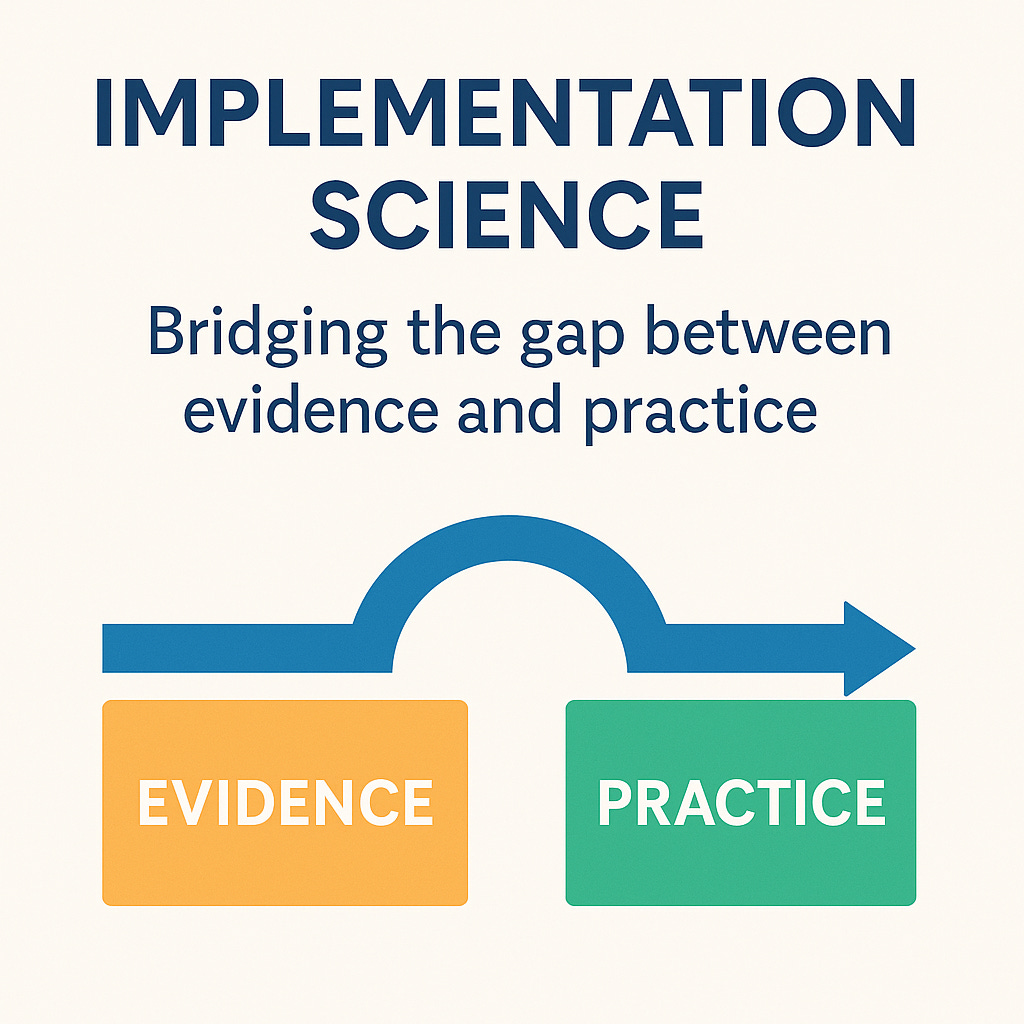
And that gap between proven interventions and real-world uptake is exactly what Implementation Science exists to solve.
What Is Implementation Science?
Implementation Science is a discipline focused on how to move evidence-based interventions, research findings, and best practices into real-world settings—effectively, sustainably, and at scale.
It applies to:
- healthcare
- behavioral health
- education
- leadership and organizational development
- policy and community programs
Implementation Science studies what it really takes for positive change to happen in complex systems.
It asks questions like:
- Why do evidence-based interventions fail to be adopted?
- What barriers prevent people from using proven practices?
- How do we adapt interventions to different settings while preserving effectiveness?
- Which strategies actually support behavioral and organizational change?
- How do we measure whether an implementation was successful?
Why Evidence-Based Practices Don’t Automatically Translate Into Real-World Adoption
You can have the strongest clinical-trial evidence in the world, but if the intervention:
- doesn’t fit workflow
- increases burden
- isn’t reimbursed
- requires training no one has time for
- lacks leadership support
- conflicts with culture
…it will not be used.
Why Implementation Science Matters to My Work
My career in clinical research and now in developing The Witness Method™ — has shown me that knowledge is not enough.
Change requires: insight, structure, behavior change, systems thinking, and ethical responsibility.
The Bottom Line
In a world full of proven solutions, Implementation Science answers the questions that move us forward:
Not “Did it work?” but “How do we make it work here, with these people, in this context, and sustain it over time?”
If you are interested in further reading about research frameworks, I have included a few below.
CFIR: A Consolidated Framework for Implementation Research.
iPARIHS: The Integrated-Promoting Action on Research Implementation in Health Services Framework.
Expert Recommendations for Implementing Change (ERIC).
This is important work here. "Not 'Did it work?' but “How do we make it work here, with these people, in this context, and sustain it over time?” This is absolutely teh question I wish more employers asked.