
What Easter Holds
The Meaning of Easter: Renewal, Symbolism, and New Beginnings Across Faith, Culture, and Community

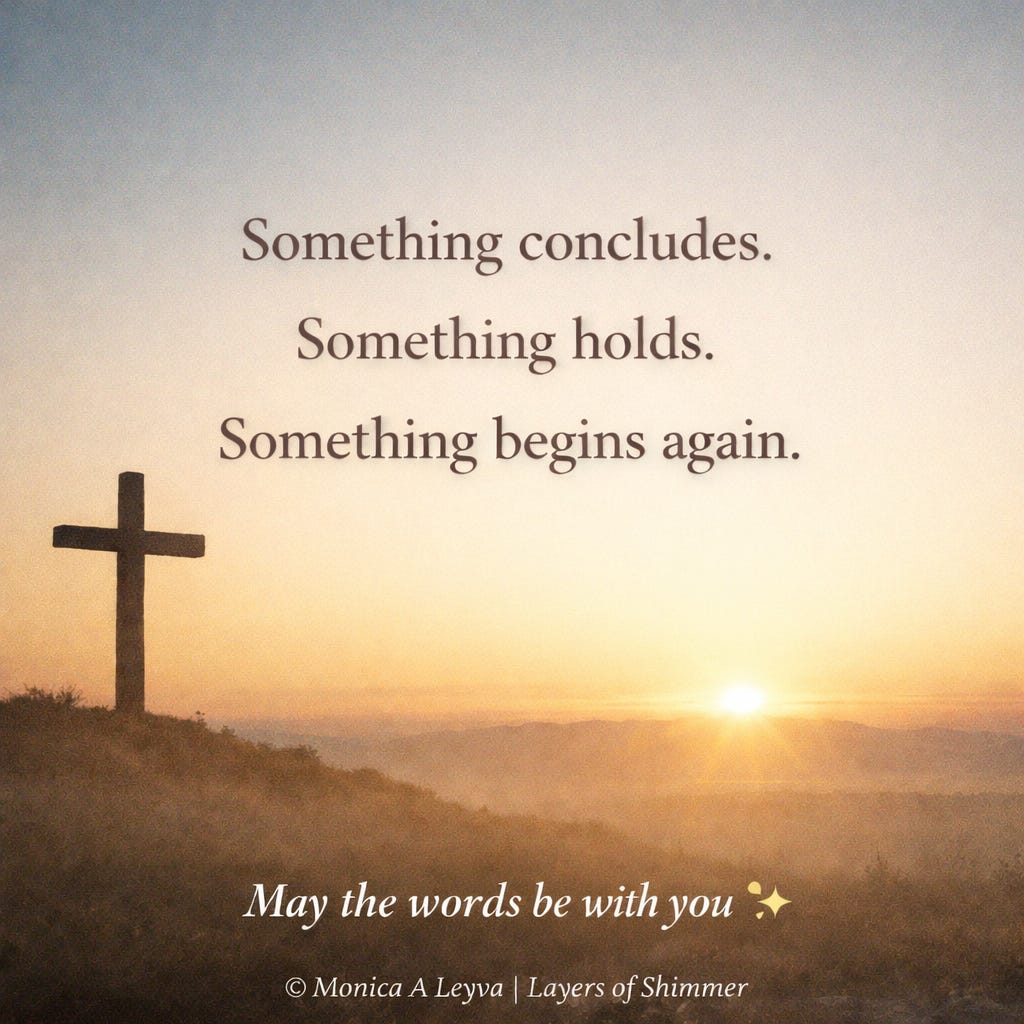
Easter is often treated as a tradition. It operates as a structure.
Easter exists across multiple layers of meaning, each one carried forward through time, each one interpreted through different systems of belief, memory, and practice.
At its most recognized origin, Easter is rooted in the Christian observance of the resurrection of Jesus Christ. It marks a continuation following death, a restoration that redefines finality, and a theological assertion that life persists beyond its apparent end. Within this framework, Easter is structured around sacrifice, loss, and renewal, forming one of the central narratives of Christian faith.
At the same time, Easter aligns with the seasonal transition into spring. This alignment is essential. Long before its formal association with Christianity, this period of the year was observed as a point of environmental shift. Winter recedes. Light extends across the day. The ground, previously dormant, begins to produce again. Across multiple cultures, this transition has been interpreted as evidence of continuity. Life withdraws, reorganizes, and re-emerges.
These seasonal patterns shaped early symbolic systems that continue to appear in modern Easter traditions. Eggs function as representations of contained potential. They hold the suggestion of life before it is visible. Their use in celebration reflects an understanding of emergence as a process rather than a moment. Similarly, animals associated with reproduction, such as rabbits, became linked to the season through their capacity to represent abundance and continuation.
Over time, these elements merged. Religious observance, seasonal awareness, and cultural practice became interwoven. What remains is a holiday that operates across multiple registers. For some, it is a sacred event grounded in faith. For others, it is a seasonal marker, an acknowledgment of environmental renewal. For many, it is expressed through shared rituals such as gathering, preparing food, or participating in traditions that emphasize color, discovery, and repetition.
What is consistent across these interpretations is the underlying structure.
Easter follows a structure of renewal.
As a transformation. What emerges differs from what existed before. It carries the conditions of what it has passed through. This applies to the natural world, to religious narratives, and to individual experience.
In this way, Easter functions less as a single meaning and more as a pattern that can be observed across contexts.
Something concludes. Something holds. Something begins again.
Reflection
If Easter offers anything beyond tradition, it provides a framework for movement.
Continuation requires willingness.
The natural world proceeds with what is available. Light extends gradually. Growth appears in uneven intervals. Renewal develops through persistence.
There is a practical implication in this.
Movement forward can begin with small acts of re-engagement.
A conversation resumed. A commitment revisited. A part of oneself acknowledged. These actions function as structural beginnings.
Consider what in your own life is ready to begin again.
Easter can be approached as a point of decision. A moment to assess what has concluded, what remains, and what is still possible.
This extends beyond the individual. It applies to how we participate in community.
Spaces like Substack hold the same pattern.
Ideas emerge, stall, and re-emerge. Writers pause and begin again. Connections form gradually through attention, through response, through presence over time.
Today is a point of intention.
Return to a piece. Support a writer. Write what has been waiting.
These actions are small, but they accumulate. They build continuity.
Change remains available. The pattern supports it.
The question becomes whether participation follows.
© Monica A Leyva | Layers of Shimmer
Happy Easter 🐣, Monica! Thank you for the reminder to be grateful for opportunities for renewal and celebration. 🙏
Happy Easter! I was just thinking the other day, how did rabbits and chocolate eggs end up in Easter? In Portugal, we also have Easter almonds, which are egg-shaped, hard sugar-coated almonds. Can break a tooth... Anyhow... I am rambling.